Back when Google Maps listings were new, most business owners ignored them. The ones who claimed their listing, filled it out, and kept it accurate ended up owning the map in their area for years. Their competitors caught up later, and it took a lot more work.
That same window just opened again, this time inside ChatGPT.
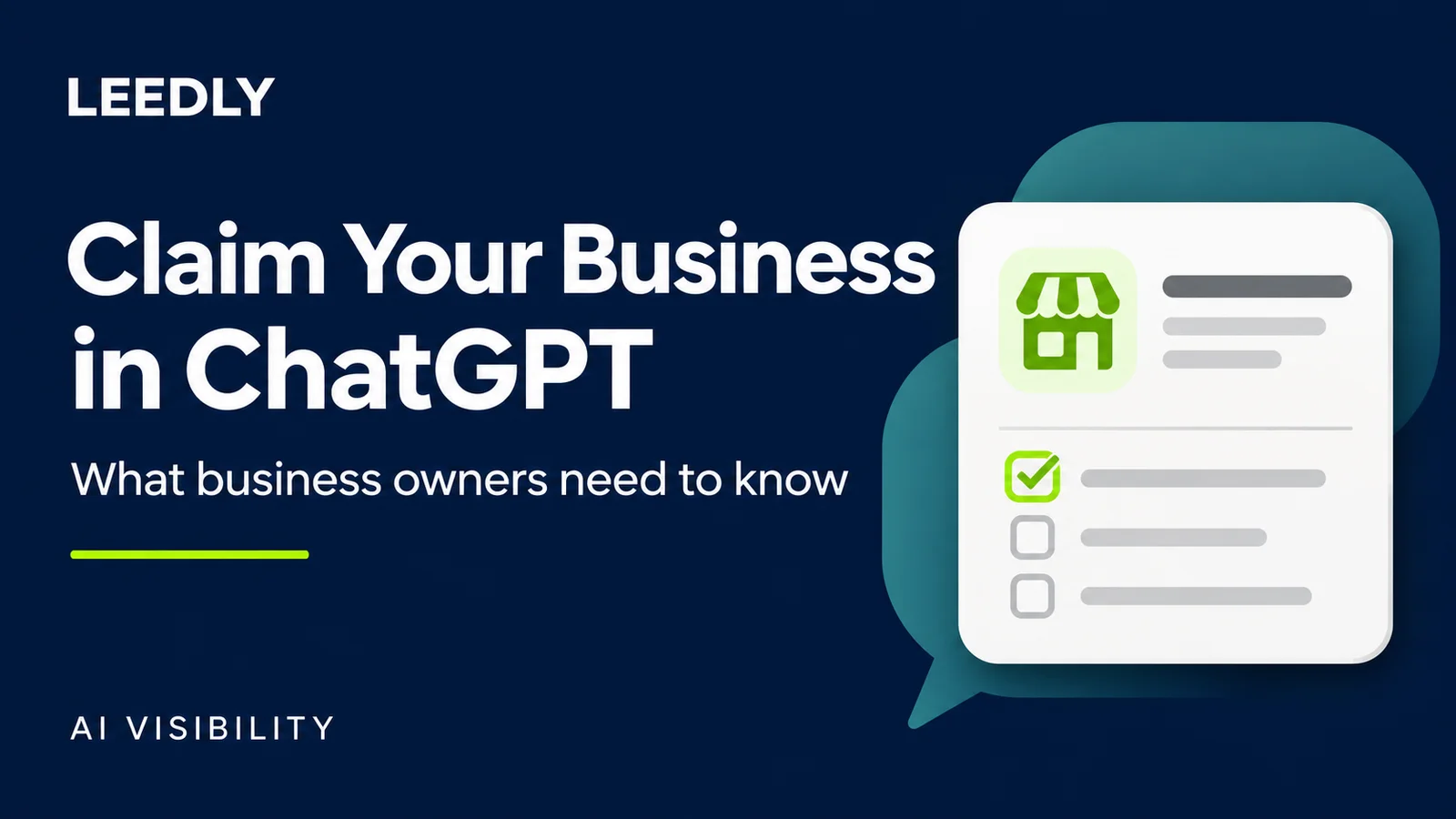
On November 10, 2026, OpenAI introduced Businesses in ChatGPT, now in beta. Through a new tool called Business Hub, a business can claim its profile in ChatGPT, keep its information current, and see how people engage with it. OpenAI says ChatGPT reaches 1.2 billion people each week. When one of them asks for a recommendation in your category, this profile is part of how ChatGPT presents your business.
Here is what is actually live, who can use it, and what we would do this week.
What businesses can do right now
These come straight from OpenAI’s announcement and its setup guide in the Help Center.
- Claim your business. Sign in to ChatGPT, open Business Hub from the sidebar, and search for your business by name. You verify by business phone, business email, a DNS record on your website domain, or a connected Shopify store. OpenAI reviews the claim.
- Verify your identity. After the claim is approved, you complete an identity check with Persona. That step unlocks editing, insights, and the blue verified badge on your profile.
- Update your details. Verified businesses can update their website, business description, product or service category, logo, cover photo, and delivery and return policies. OpenAI reviews changes before they publish.
- Add a product feed. If you sell products, you can connect a feed with prices and availability, by CSV, hosted URL, or Shopify.
- See insights. Business Hub shows mentions, website clicks, and discovery topics, which are the common themes in answers where ChatGPT mentioned or cited you. For a local business, a mention counts when ChatGPT shows a result for your location.
- Launch a Business Agent, if eligible. Eligible ecommerce and online service businesses in the U.S. can build, test, and publish their own agent. When someone opens your profile, they can choose to chat with it about your products and policies. OpenAI also lets businesses sponsor that agent as the destination for ChatGPT Ads.
The fine print worth knowing
This is a beta, and a few details matter before you get excited:
- Business Agents are not open to local service businesses yet. For now they are limited to eligible U.S. ecommerce and online service businesses. OpenAI says it plans to expand to more markets and categories over time.
- Local stores and restaurants can only claim an existing U.S. listing for now. If ChatGPT already knows about you, you can claim it.
- Claiming does not buy rankings. OpenAI is clear that claiming does not guarantee more visibility, and ads do not influence ChatGPT’s independent answers. ChatGPT also pulls from other sources when it talks about your business.
- You do not see conversations. Insights are aggregated, and individual prompts and agent chats are never shared with you.
- You need to own the business or be authorized to represent it. The person who claims it can later add teammates and give an agency access.
In other words, this does not replace the work of being the obvious choice. It gives you a place to make sure ChatGPT has your facts right.
Why the Google comparison fits
For years, Google Business Profile was called Google My Business. In the 2010s, the businesses that claimed their listings early and kept them complete became the names people saw first on the map. The ones who waited spent years trying to catch up.
A ChatGPT profile works on the same idea. When a buyer asks a question and your business comes up, they can click through to your profile. If that profile is claimed, accurate, and consistent with everything else online about you, it backs up the answer. If it is empty or wrong, it works against you.
What to do this week
1. Claim your profile. Open Business Hub in ChatGPT, find your business, and pick the verification method that fits. Domain verification needs a DNS record, so loop in whoever manages your website if that is not you. Then finish the Persona identity check so you can actually edit your details and see insights.
2. Make it match your Google Business Profile exactly. Your business name, address, phone number, website, and services should read the same in ChatGPT as they do on Google, your website, and your main directories. Mismatched details are one of the easiest ways to confuse AI assistants about who you are. If something on your ChatGPT profile is wrong and you cannot edit it yet, fix it at the source on Google and your website, and keep checking.
3. Ask ChatGPT what your buyers ask. Type the questions your customers would type, like “best roofer near me for a leak repair” or “who does same-day AC service in my area.” Note who gets recommended and what sources ChatGPT cites. That tells you where you stand today and which listings and pages matter most.
4. Check your insights once they appear. After verification, look at your mentions, website clicks, and discovery topics. Discovery topics show the themes ChatGPT already connects you with, which is a useful guide for what to write and publish next.
Your Google profile still does the heavy lifting
Your Google Business Profile is still one of the strongest signals AI assistants use to understand a local business, and it is where many of your customers start. That is why our Google Maps Agent runs a steady weekly routine on your profile: fresh posts, new photos, review requests and replies, and checking that your name, address, phone, and services stay consistent everywhere they appear. Google Maps Boost is $497 a month with no setup fee and no long-term contract.
That consistent foundation is exactly what a new ChatGPT profile should line up with. Get Google right, claim ChatGPT, and make the two agree.
FAQ
Can my business claim a profile in ChatGPT right now?
If your business is eligible and located where ChatGPT is available, yes. Sign in to ChatGPT, open Business Hub from the sidebar, search for your business by name, and verify by phone, business email, website domain, or Shopify. OpenAI reviews each claim. Local stores and restaurants can currently claim only an existing U.S. listing.
Can a local service business launch its own Business Agent?
Not yet for most. OpenAI says Business Agents are available to eligible ecommerce and online service businesses in the United States with a website, and that it plans to expand to more business types over time. Local businesses can still claim their profile, update details, and see insights.
Will claiming my profile make ChatGPT recommend me more?
OpenAI says claiming does not guarantee more visibility or give you control over ChatGPT’s independent answers, and advertising does not influence them either. Claiming lets you make sure the information you provide is accurate. Recommendations still depend on what ChatGPT reads about you across the web.
What insights does Business Hub show?
Aggregated activity over the past 28 days, including mentions, website clicks, and discovery topics, which are common themes in answers that mentioned or cited your business. You do not see individual prompts or customer conversations, and a blank metric does not necessarily mean zero activity.
See what ChatGPT says about you today
Before you claim your profile, it helps to know where you stand. Our free AI visibility scan shows how your business shows up when people ask AI assistants about businesses like yours, and what to fix first.